Weather Windows and Operational Limits
A weather window is a continuous period in which every limit for a lift holds for its full reference period.
Significant wave height (Hs) and wave period are the usual limits, set for the vessel, crane, payload, rigging and lift phase. For a weather-restricted operation, DNV-ST-N001 takes the reference period as the planned operation time plus a contingency, and sets the forecast limit at the operational limit times an alpha factor below 1 to cover forecast uncertainty. A calm hour at the start does not make a window: the limits have to hold for the whole period.
An envelope, a window and a campaign result.
Each answers a different question. Moving from one to the next needs more project information.
Operating envelope
Which conditions satisfy the defined response criteria for the lift?
Required data and output
- Required project input
- Vessel, crane, payload, rigging, compensation system and lift phase
- Output
- Case-specific Hs/Tp operating envelope
Executable window
Do conditions remain acceptable for the complete required period?
Required data and output
- Required project input
- Site and season data, required continuous duration, forecast and alpha criteria
- Output
- Executable windows, including persistence
Waiting time & cost
What delay and cost follow from the planned activities and their windows?
Required data and output
- Required project input
- Mobilisation, sequence, downtime logic and contracted day rate
- Output
- Waiting days and cost distribution
Continuity determines which periods are usable.
Both rows meet the criterion in 8 of 12 intervals. This example requires four consecutive intervals.
Illustrative requirement: at least four uninterrupted intervals inside the criterion.
A / Fragmented availability
8 of 12 intervals inside the criterion
- ✓
- ✓
- ×
- ✓
- ✓
- ×
- ✓
- ✓
- ×
- ✓
- ✓
- ×
B / Longer continuous runs
8 of 12 intervals inside the criterion
- ✓
- ✓
- ✓
- ✓
- ×
- ×
- ✓
- ✓
- ✓
- ✓
- ×
- ×
This is an explanatory sequence, not a weather record or a project screen. An actual operation uses its declared reference period and all applicable criteria.
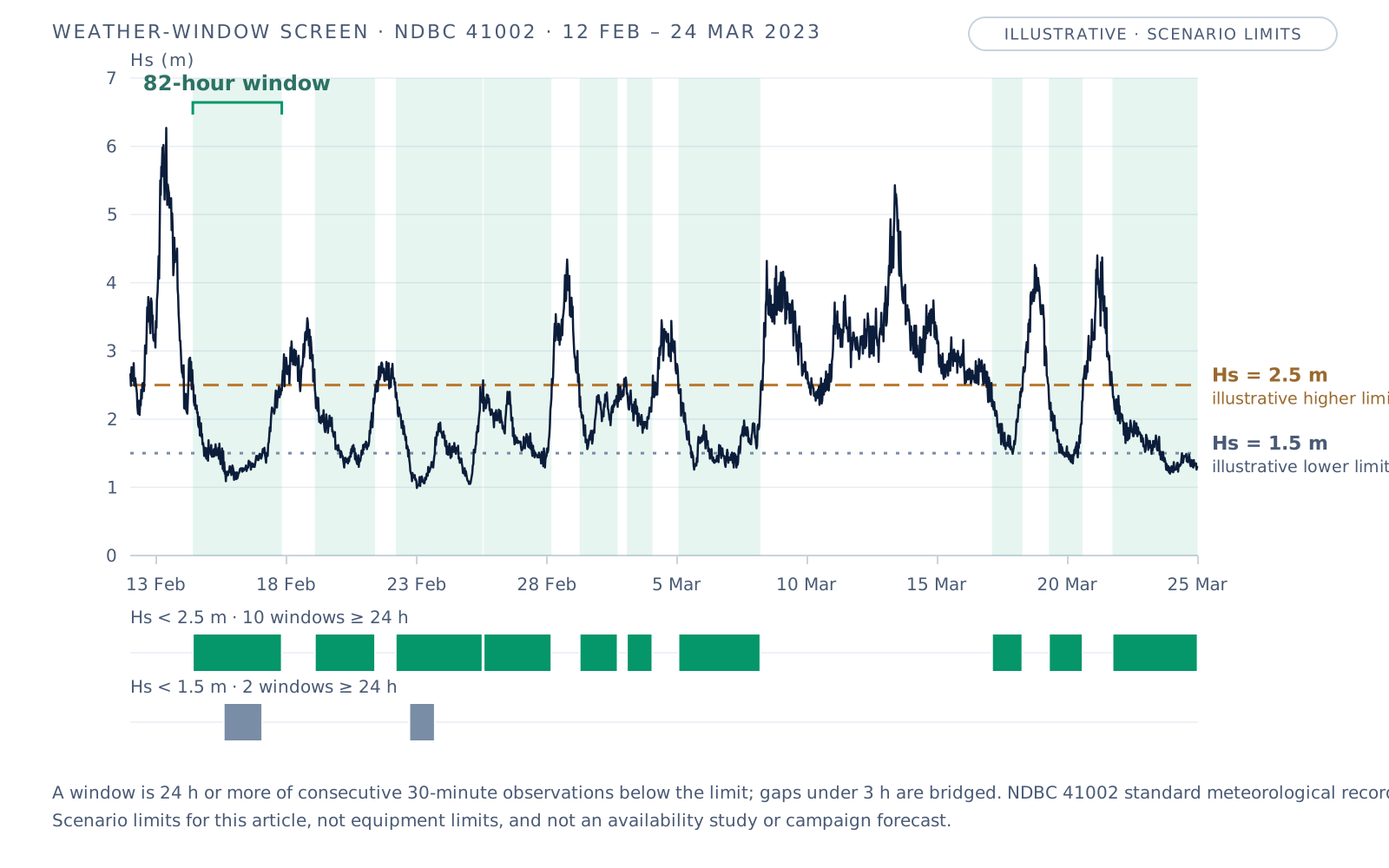
What changing the threshold does in this record.
NDBC 41002 · 12 February–24 March 2023 · continuous windows of at least 24 hours.