
Heave compensation and shock absorption for offshore lifting.
Six product lines cover passive, adaptive and active heave compensation, crane shock absorption and tensioning. Every unit is sized from first principles and screened in CONSTELLATION before it ships.
Screened in CONSTELLATION to DNV-RP-N103
Start with the lift, not the catalogue.
The control level rises across the family: from manually set passive units to full active feedback. Start with your operating case; the simplest suitable product is usually the right starting point.

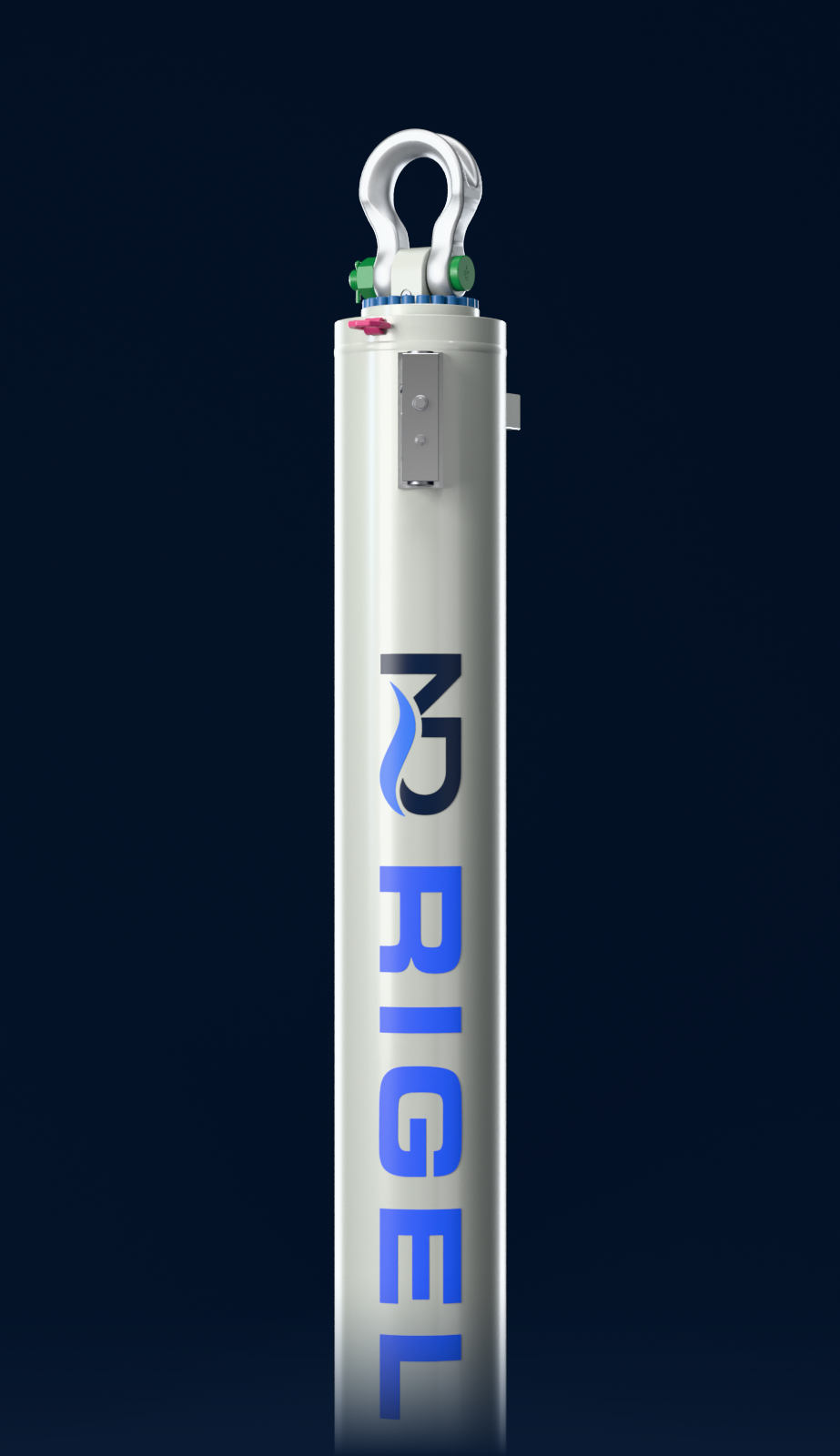
RIGEL: Basic passive heave compensator
The compact passive choice for splash-zone crossings and simple subsea lifts: manual damping, set on deck, DNV Type Approval in progress.

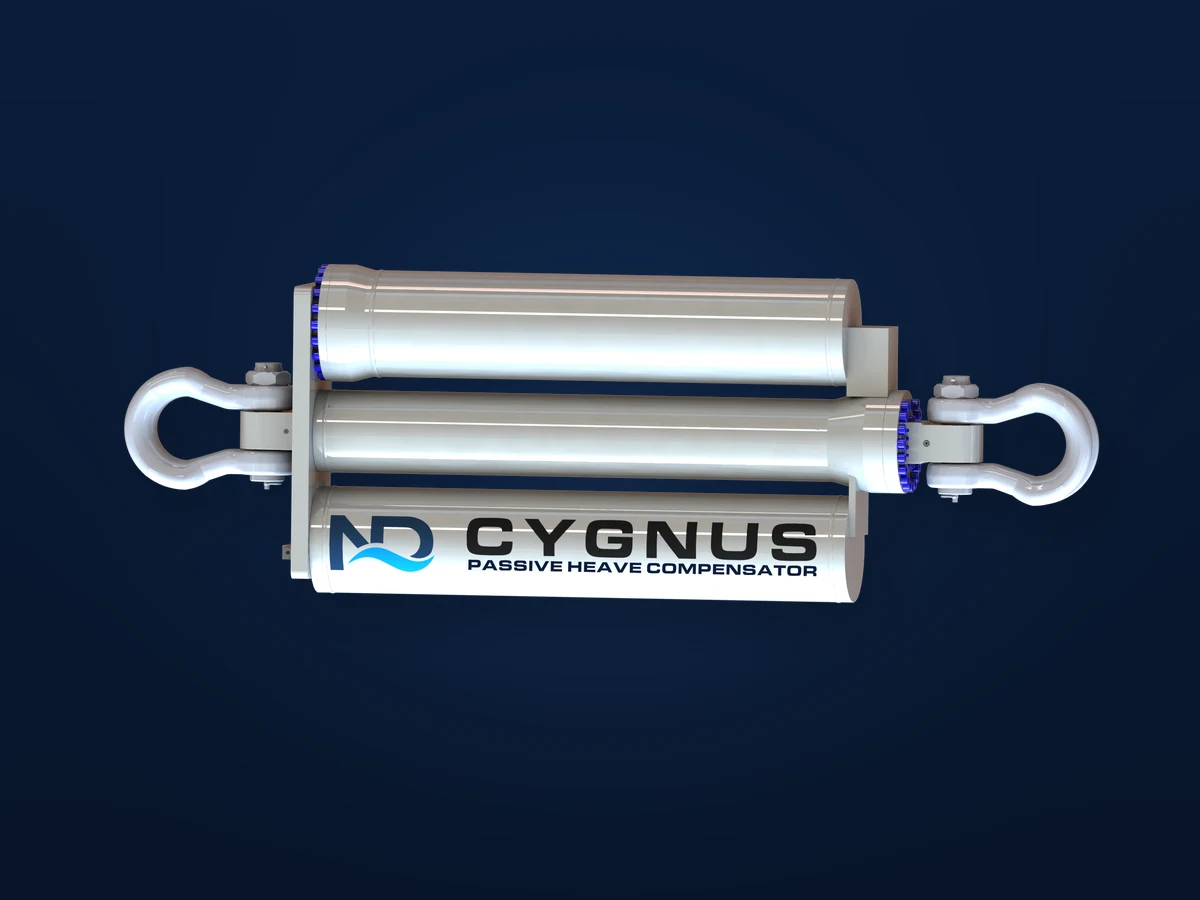
CYGNUS: Passive heave compensator
Wide-range passive control, from 12.5 t to 10,000 t: self-centering spring, manual damping, rated to 3,000 m.

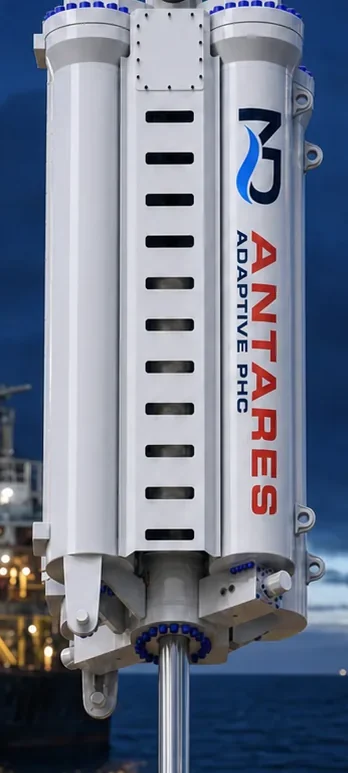
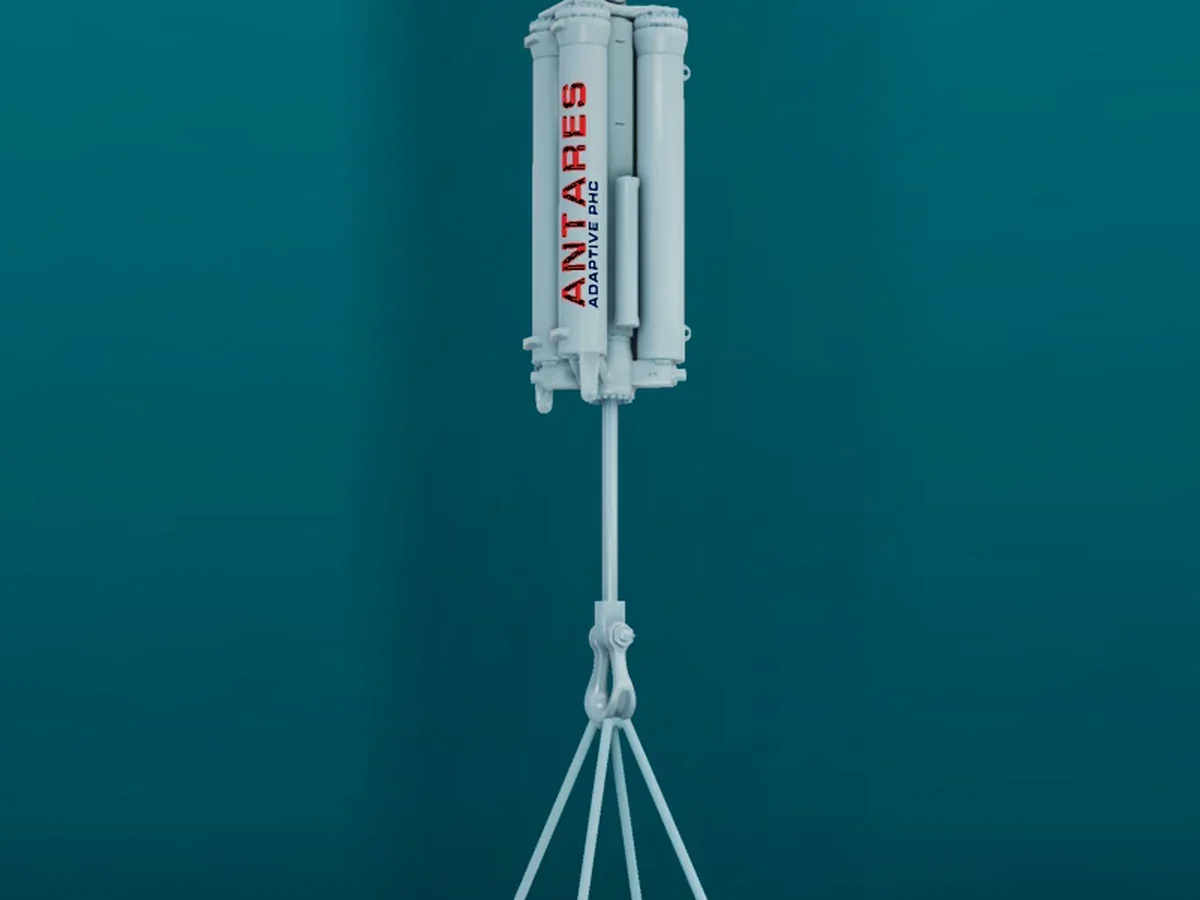
ANTARES: Adaptive passive heave compensator
Automatic damping control and quick lift for complicated, multi-step subsea lifts: the unit adapts through the phases of the operation.

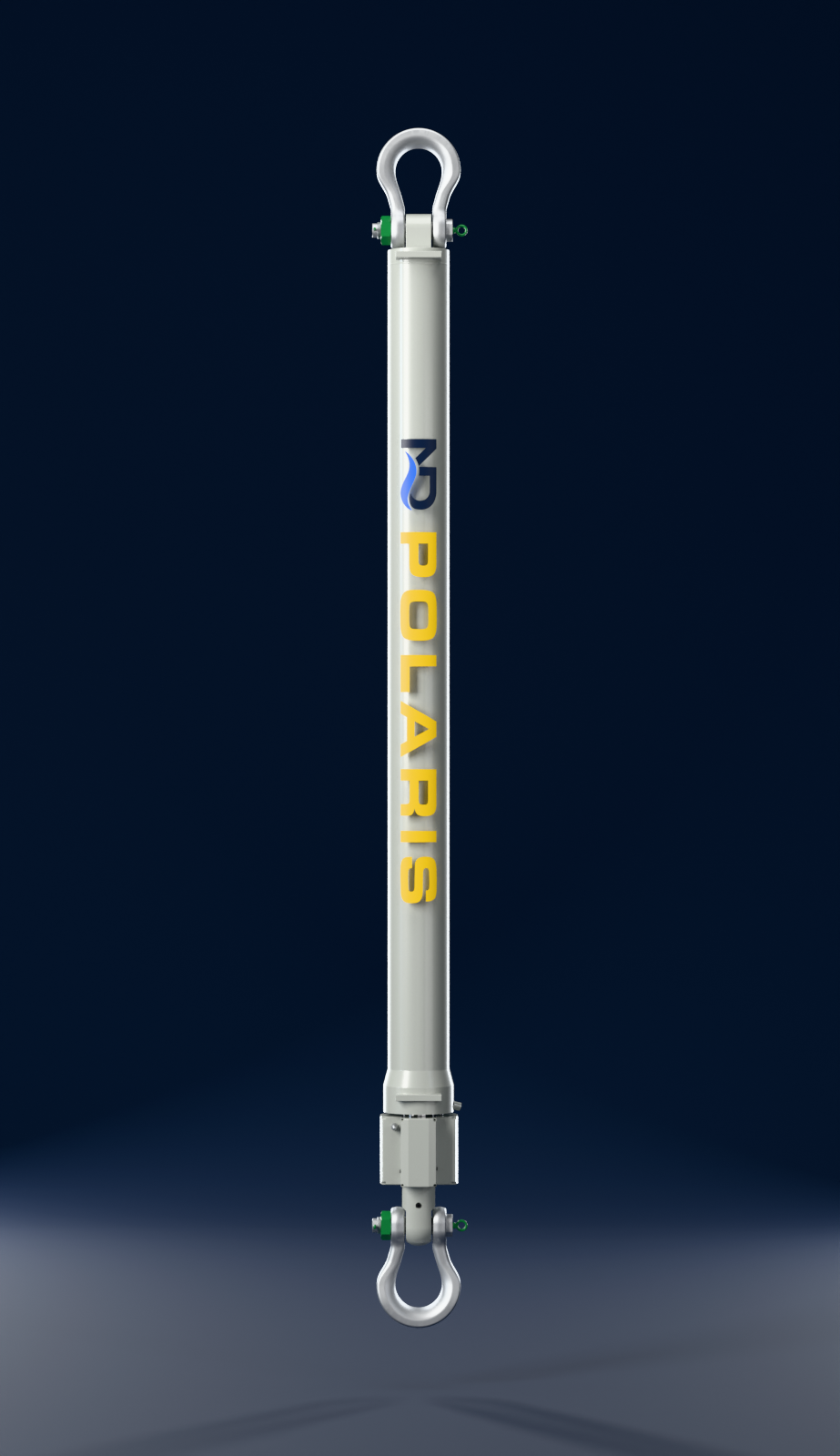
POLARIS: Lightweight crane shock absorber
Topside overload protection for falling-object loads such as a piling hammer: the whole function in a single cylinder, no accumulators, no needle valves.

VEGA: Active heave compensator
MRU-driven active cylinder control with automatic damping, powered by a large onboard battery: no umbilical, no external power. VEGA-T topside first; VEGA-S subsea.
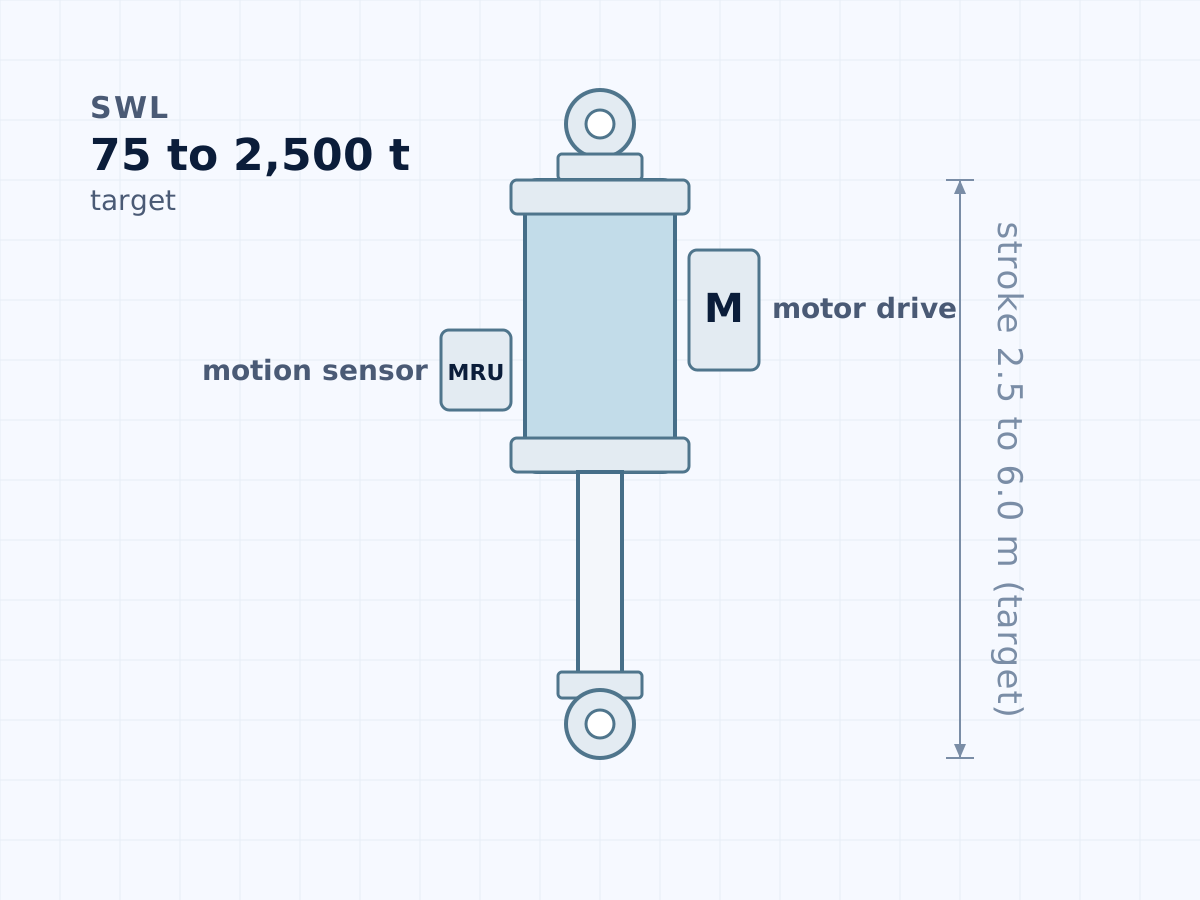

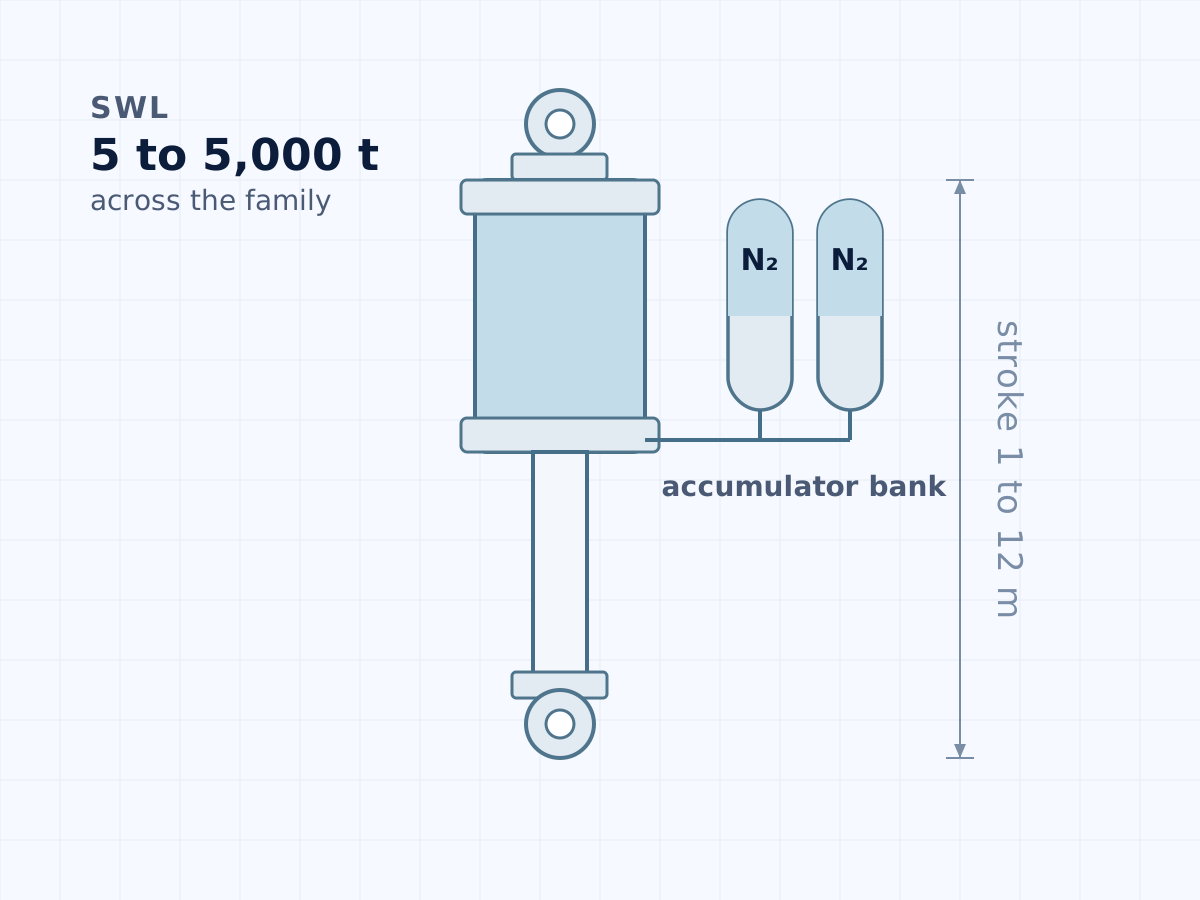
SIRIUS: Tensioner
A general-purpose tensioner family that holds a set tension while the vessel moves, from backup riser tensioning to workover: topside, with strokes from 1 to 12 m, selected from the operating window and required tension.

CONSTELLATION: Lift screening & operability
Our in-house time-domain lift simulator: the whole operation modelled deck to seabed and screened across every sea state to DNV-RP-N103. Every unit above is sized with it.
Custom hydraulic equipment
Cylinders, telescopic units, rams, intensifiers, accumulators, valve blocks and HPUs: designed, built and tested to your specification for offshore and subsea service. Duplicates of existing units welcome.

Purchase or campaign rental
Units are available to buy or to rent for a campaign. Each one is built to the duty of your lift, so terms follow the configuration, the duration and your schedule: send your lift case with your dates and we will come back with the options that fit.
The 2026 product brochure.
The whole product family in ten pages: verified SWL and stroke ranges, entry prices, the application matrix, photos of delivered hardware and worked CONSTELLATION screening results. English and Chinese editions; the download links appear right here after one short form.
The product family, compared
Swipe to see all columns →
| Compare |  |  | |  | |  |
|---|---|---|---|---|---|---|
| Type | Basic passive | Wide-range passive | Adaptive passive | Active | Crane shock absorber | Tensioner |
| Best fit | Simple splash-zone crossings and compact PHC | Passive lifts across the widest SWL range | Complicated, multi-step subsea lifts | Topside or subsea active motion compensation | Crane shock absorption and overload protection | Constant-tension duties, such as backup riser tensioning |
| SWL | 55–1,000 t | 12.5–10,000 t | 30–4,000 t | 75–2,500 t | 75–4,000 t | 5–5,000 t |
| Stroke | 1.0–6.0 m | 1.0–6.0 m | 2.5–8.0 m | 2.5–6.0 m | 1.0–8.0 m | 1.0–12.0 m |
| Control | Manual damping and stiffness | Manual damping, self-centering spring | Automatic damping, self-centering spring, quick lift | Automatic damping, active cylinder control, self-centering spring | Manual damping | Manual damping |
| Form factor | Subsea | Subsea | Subsea | Topside / subsea | Topside | Topside |
| Budget from | USD 35,000 | USD 15,000 | USD 100,000 | In development | USD 20,000 | In development |
Engineering review depends on sea state, wave period, payload, water depth and operation sequence. Budget figures are entry points for the smallest configurations: final pricing follows capacity, stroke and classification.
Open the full selection guide →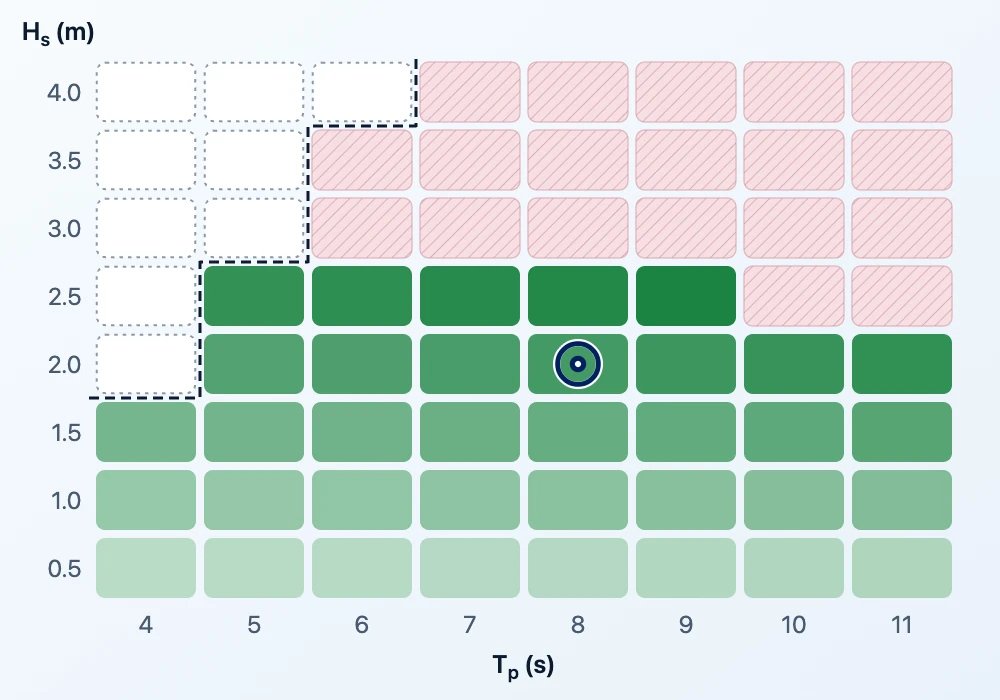
Every unit is sized in CONSTELLATION.
Send the lift data and operation sequence: we model the whole operation deck to seabed, screen it across every sea state, and return your operating window, the governing limit and the recommended configuration.