
Norwegian DynamicsHeave compensation
Fewer lost days waiting on weather.
Heave compensators and crane shock absorbers for offshore lifts, designed to DNV-ST-0378. We run your whole lift in CONSTELLATION, our time-domain simulator, and size the unit to your operating window.
Subsea · Oil & gas · Offshore wind
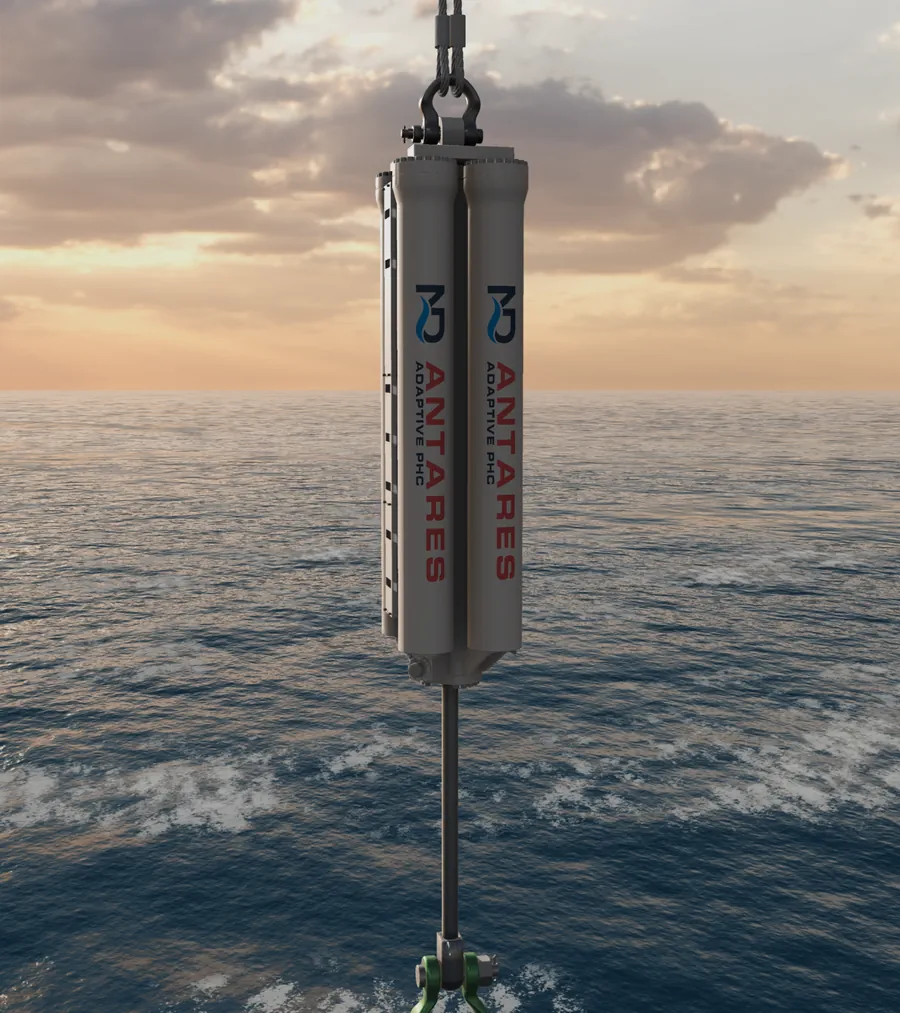
ANTARES in the load path
Rendered by CONSTELLATION
- Design basisDNV-ST-0378With DNV-OS-E101 where it applies
- Rating, maximum force12.5 to 10,000 tCompensators, stroke up to 8 m
- Rated depth3,000 mANTARES, CYGNUS and RIGEL
- Lift screeningCONSTELLATIONVerified code-to-code against OrcaFlex
- Delivered500 t / 8 mDrilling tensioner, Brazil
01 Evidence
The same lift, with and without the compensator.
The same lift ran twice in CONSTELLATION: on bare rigging, then with the heave compensator in the load path. Sea, wave seed, payload and crane are identical in both runs. This is one commissioned case.
- Bare rigging
- With RIGEL
- Payload weight in air, 343 kN (DAF reference)
- Slack, zero tension
One commissioned case at one sea state, modelled in CONSTELLATION: an engineering estimate, not a certified analysis, and not transferable to another lift.
Bare rigging → With RIGEL
65 percent lower peak sling-group tension on the same wave record.
Inside the ND screening default of 2.0 on all eight wave realisations.
The rigging stays in tension through the whole crossing.
CONSTELLATION is verified code-to-code against OrcaFlex on identical cases, including 9 of 9 physics laws for splash-zone entry.
02 Operating window
What a screening returns: your operating window.
Every ND compensator is screened across the full sea-state range, gate by gate. The answer is a workable region of sea states, your weather window, with the governing limit named, not a single number.
Illustrative exampleA ~190 t subsea structure installed deck to seabed on an ANTARES 250 t adaptive compensator, head sea, representative winter climatology. It is not a project run, and its cells are not transferable to another lift.
- Workable, darker is nearer the limit
- No-go
- Too steep to occur (DNV-RP-C205)
- Design sea state, Hs 2.0 m at Tp 8 s
Acceptance gates, illustrative defaultssplash DAF ≤ 2.0 · slack-sling = 0 · landing DAF ≤ 2.5 · touch-down ≤ 0.5 m/s · stroke ≤ 90%
Operate up to this wave height at the design period. The compensator keeps the rigging in tension through the splash and softens the seabed set-down.
of the season workable on this representative climatology.
splash-zone snap load against the DNV-RP-N103 limit: the rigging stays in tension.
Modelled prediction screened to DNV-RP-N103 on a representative metocean basis: an engineering estimate, not a certified analysis. The operating window is confirmed against project metocean and the contracted vessel for each lift.
03 Product family
Start with the lift, not the catalogue.
Tell us what you are doing and what the load weighs. We put our heave compensators and crane shock absorbers in order for the job.
Automatic damping control and quick lift for complicated, multi-step subsea lifts: the unit adapts through the phases of the operation.
ControlAutomatic damping, self-centering spring, quick lift
View ANTARESPortraits are rendered by CONSTELLATION from the worked-example models. VEGA and SIRIUS are in development and shown as concept outlines.
 30–4,000 t2.5–8.0 mAdaptive passive heave compensatorSubsea · 3,000 mControlAutomatic damping, self-centering spring, quick lift
 12.5–10,000 t1.0–6.0 mPassive heave compensatorSubsea · 3,000 mControlManual damping, self-centering spring
 55–1,000 t1.0–6.0 mBasic passive heave compensatorSubsea · 3,000 mControlManual damping and stiffness
 75–4,000 t1.0–8.0 mLightweight crane shock absorberTopsideControlManual damping
 75–2,500 t2.5–6.0 mActive heave compensatorTopside / subsea · target rangeControlAutomatic damping, active cylinder control, self-centering spring
 5–5,000 t1.0–12.0 mTensionerTopside · target rangeControlManual damping
Bars show each product’s published rating range on a logarithmic scale. Ratings are a starting point: confirm the datasheet, configuration, availability and certification deliverables for the proposed unit.
Also: custom hydraulics, cylinders, HPUs and systems up to 200 t equipment weight, 30 m length and 1,000 bar.
04 Applications
From the splash zone to the seabed, and back up.
Whatever phase of the lift the dynamic loads bite, there is a compensator and an operations playbook for it.
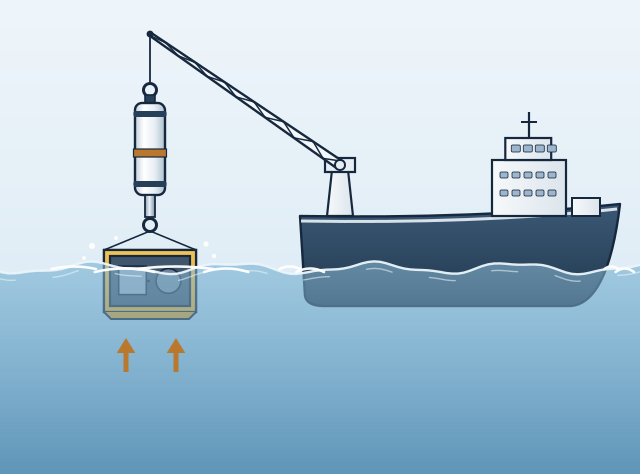
Splash-zone crossing
Keep the slam and snap off the crane and rigging through the wave zone.
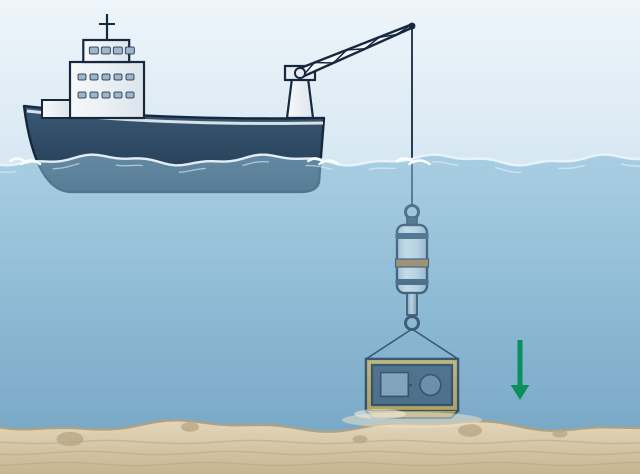
Subsea lift & landing
Control dynamic loads from surface to seabed and land safely first time.
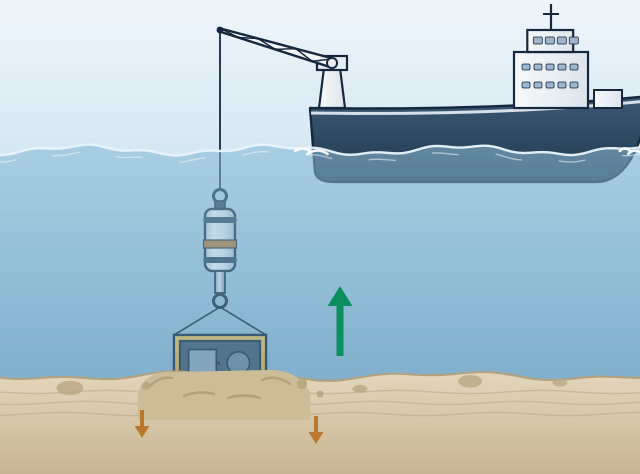
Subsea retrieval
Break out and recover through the water column with the snap held in check.
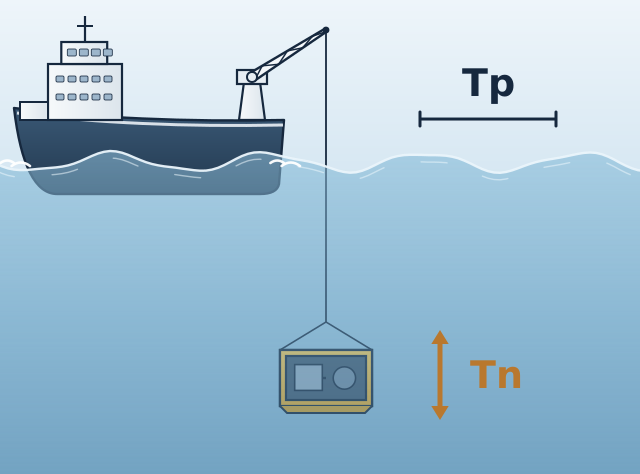
Resonance avoidance
Keep the suspended load detuned from the wave period.
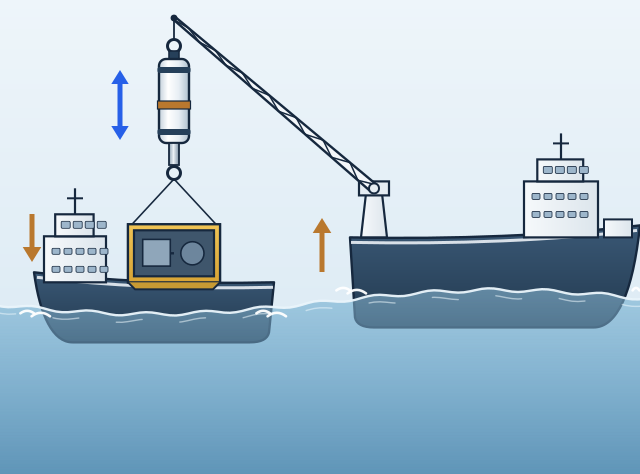
Transfer lift
A clean load transfer between two independently moving vessels.
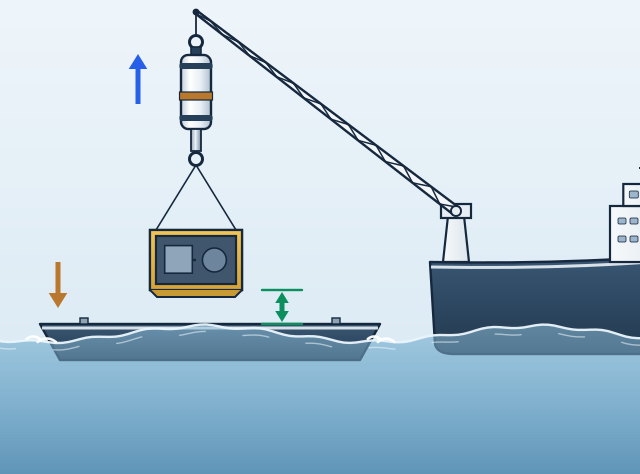
Quick lift off a barge
Snatch the payload off a heaving barge before the next wave returns.
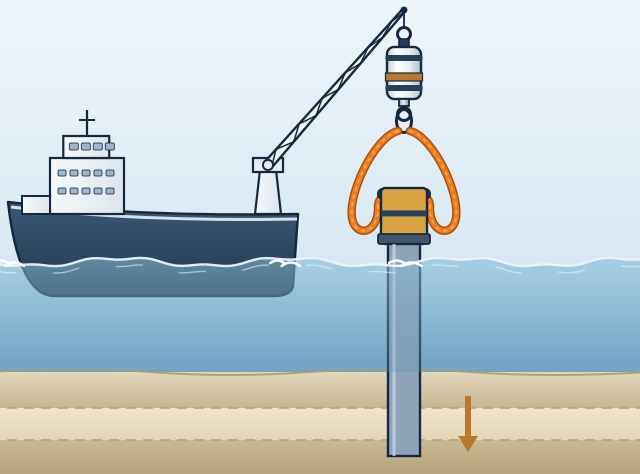
Pile-run protection
Cap the shock when a driven pile breaks free and runs.
All applications
Browse every operation we support, including resonance, tensioning and weather-window studies.
View all
05 One team
From the first drawing to decommissioning.
The people who run your feasibility study are the people who design the cylinder, sign off the factory acceptance test, and support it in the field.
- 01
Engineering studies & analysis
Before you commit steel, we prove the lift on paper.
- 02
Product & system design
Engineered to your case, not a catalogue.
- 03
Manufacturing & assembly
Built to spec and proven before it ships.
- 04
Installation & commissioning
Into the water, verified and handed over.
- 05
Operations support & field service
Commissioning and offshore support by arrangement, and remote support when operations need it.
- 06
Maintenance, upgrades & lifecycle
Kept ready for the long run.
- 07
Training & technical consulting
Your crew, confident on the equipment.
- All servicesSee how it fits together

06 Track record
You may already know our co-founder’s work.
Norwegian Dynamics is a young company; the thinking behind ANTARES, CYGNUS, RIGEL, VEGA, POLARIS and SIRIUS is not. Tord Martinsen has spent his career in motion compensation. He is the inventor of adaptive passive heave compensation, inline active heave compensation and the lightweight shock absorber. That design experience is the engineering behind the range: each unit sized from first principles and screened in CONSTELLATION.
- 2010Cranemaster
Started his career in offshore motion compensation.
- 2012Founded Safelink
Built a heave-compensation product line from the ground up.
- 2024Norwegian Dynamics
Co-founded with Peter Wang to turn that experience into a product family of its own.
- 20+Patent publications
Named inventor in motion compensation, including the POLARIS shock absorber.
A 500 t / 8 m drilling tensioner, delivered in Brazil.
A custom 3 t / 1.25 m three-cylinder unit, delivered in the UK six weeks from order to handover.

Designed around DNV-RP-N202 (heave compensating systems) and DNV-ST-0378 (lifting appliances), DNV marine-operation practice and ISO 9001:2015 quality management. Units are designed to DNV-ST-0378, with DNV-OS-E101 where it applies. Design life basis: 25 years, with planned inspection and maintenance windows.
Start a lift case
Have a lift in mind? Let’s find the right compensator.
Two answers start a screening: what you are doing, and what the load weighs in air. A sketch is enough. We screen the lift in CONSTELLATION and come back with a suitable product, a first operating-window view and the next engineering step.
Water depth, sea state, vessel and crane, the space from hook to load and your limits make the first answer sharper. Leave out what you do not know and we say what we assumed.