
 Riser Tensioner
In development · design targets belowBackup riser tensioning for drilling and workover. SIRIUS is a concept selected around the operating window, riser configuration and required tension capacity.
and subject to change
How tension is held
Hydraulic cylinders work against nitrogen accumulators: as the vessel heaves, the cylinders stroke and oil shifts into the gas volume — riser tension stays inside a band across the stroke.
Read the riser-tensioning guide ↗Concept architecture — SIRIUS is in development; configurations are being defined. The diagram shows the tensioning concept, not a build drawing.
Backup tensioning, controlled compensation
SIRIUS is a tensioning concept for drilling and workover operations where backup riser tensioning and controlled compensation are required — long-stroke, topside, with manually set damping.
- Backup riser tensioning
- Workover compensation duties
- Long-stroke — targets to 12.0 m
- Manual damping
- Topside installation
Sized from the operation, not a catalogue
Operating window
The sea states and durations the operation must ride out set the compensation duty the tensioner has to carry.
Riser configuration
The riser string and its interfaces define the geometry and stroke the unit works across — design targets run long, 3.0 to 12.0 m.
Required tension capacity
The tension the riser must hold sets the capacity point — the concept is defined at 350 and 500 t.
When SIRIUS is the right choice
Drilling or workover operations that need backup riser tensioning and controlled compensation.
Engineering check
Send SWL, stroke, sea state, payload and operation sequence — the team reviews the case and confirms the practical product fit before any hardware is discussed.
Status
SIRIUS is in development. The capacity points and stroke range on this page are design targets, and configurations are being defined against real operations — early input shapes the first units.
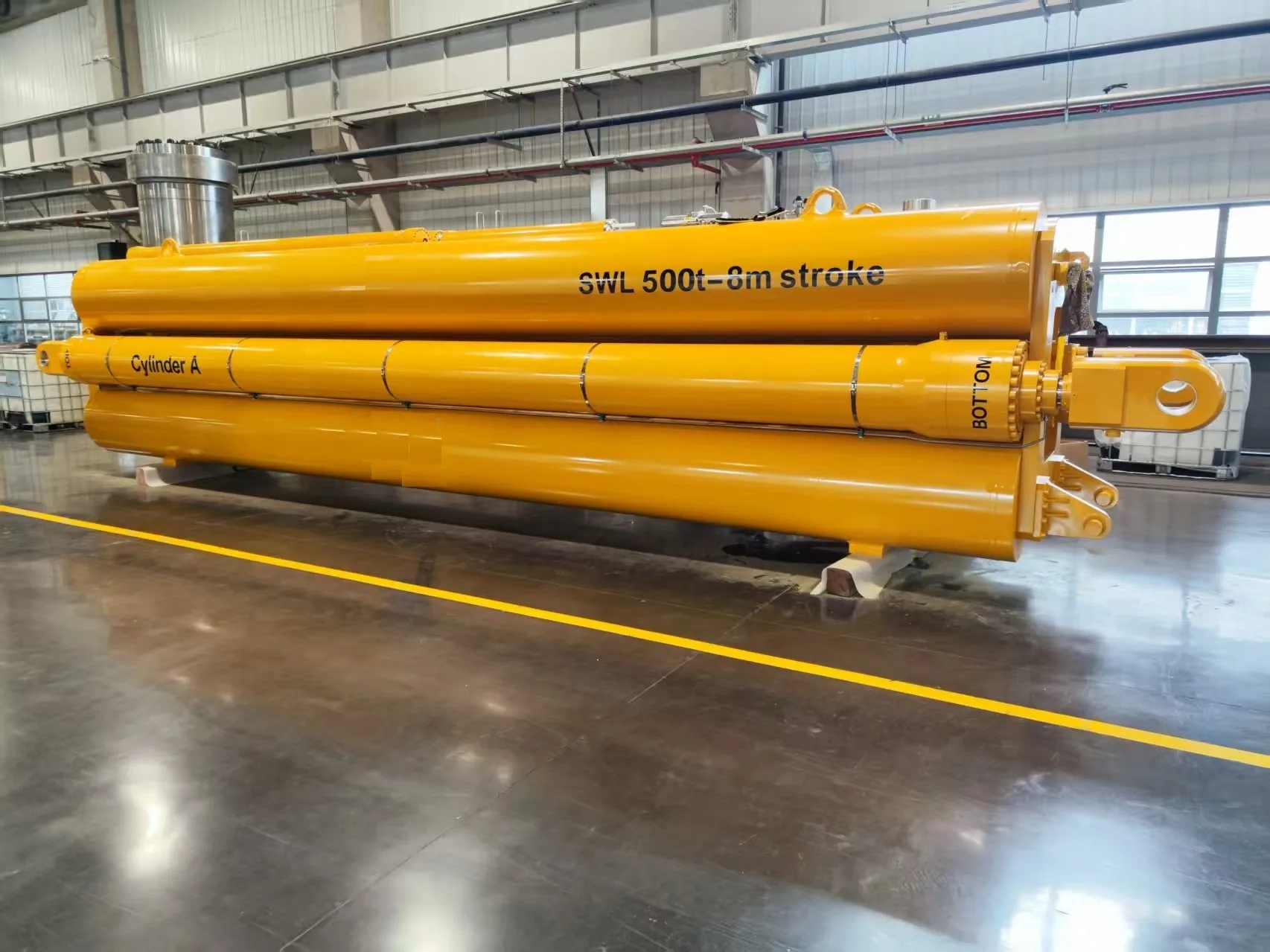
The hardware heritage is real.
SIRIUS the product is in development — the tensioner hardware behind it is not. Our team has delivered long-stroke tensioner systems before, including the 500 t / 8 m drilling tensioner shown here on the workshop floor.
SIRIUS’s lane in the Knowledge Hub
Riser tensioning
Why risers are tensioned, what the duty looks like — and where backup capacity fits.
Read → KB · PLANNINGWeather windows
How operating windows are screened and what they mean for equipment selection.
Read → KB · SELECTIONHeave compensator selection
The full product family and a practical selector for your case.
Read →Where SIRIUS sits
 SWL 12.5–10,000 t
stroke 1.0–6.0 m 03
 SWL 30–4,000 t
stroke 2.5–8.0 m 06
SWL 350 / 500 t (concept)stroke 3.0–12.0 mYou are here 07
 Lift screening
DNV-RP-N103 Compare all systems →
SIRIUS, answered
When is SIRIUS the right choice?
How is SIRIUS sized?
SIRIUS is in development — what does that mean for my project?
Discuss SIRIUS.
Indicative only — final pricing depends on tension, stroke and classification requirements.
Share the operating window, riser configuration and required tension capacity. Norwegian Dynamics will review the case and return the recommended product path and next engineering step.