DNV Standards for Offshore Lifting
Which DNV document answers which question on a lifting project, the current edition of each, and the old codes they replaced.
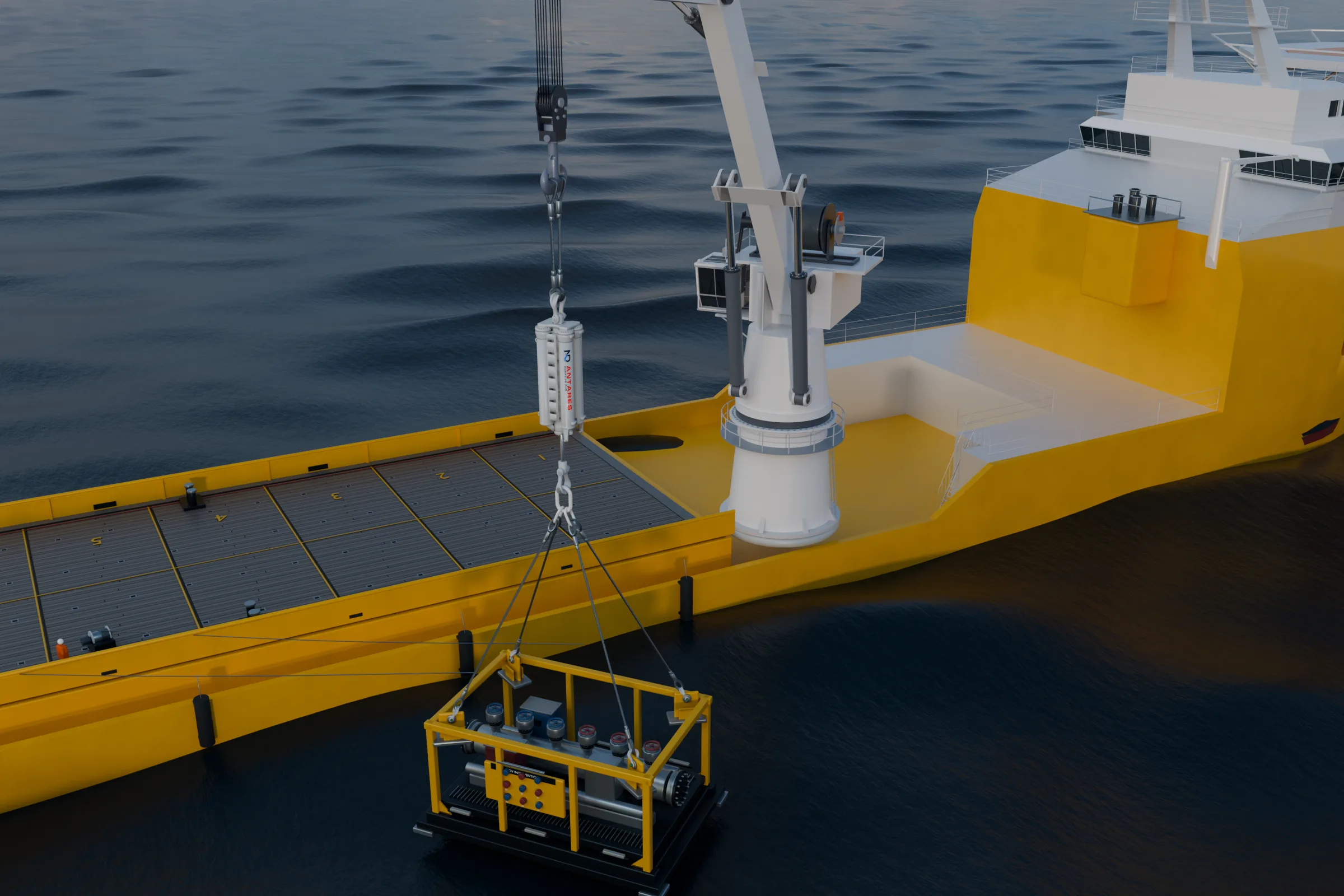
- DNV-ST-0378 sets the certification requirements for the lifting appliance, DNV-ST-N001 covers the marine operation and marine warranty, DNV-RP-N103 gives the analysis methods for the loads, and DNV-RP-N202 covers heave compensating systems. A crane lifting in subsea operations also meets DNV-RP-N201.
- DNV-ST-E271 and DNV-ST-E273 cover the lifted units themselves: offshore containers and portable offshore units.
- Current editions: ST-0378 July 2019 (amended October 2021), ST-N001 December 2023, RP-N103 July 2017 (amended September 2021), RP-N202 June 2024.
- Old codes: DNV 2.22 became ST-0377 and ST-0378; DNV-OS-H101 to H206 became ST-N001 (H203 became ST-N002); DNV-RP-H103 became RP-N103.
A compensated offshore lift touches several DNV documents at once: one for the crane and the equipment in its load path, one for the marine operation, one for how the loads are calculated, and one for the heave compensating system. Which of them apply is set by the project: the class and flag basis, the client specification and the editions named in the contract. This page maps what each one covers, so you know which to open.
Which document answers which question
| Question on the project | Document | What it covers |
|---|---|---|
| Is the crane, or the compensator in its load path, designed and certified correctly? | DNV-ST-0378 Offshore and platform lifting appliances | Design, materials, fabrication, testing and certification of offshore cranes, platform cranes and pipeline and cable laying equipment, including their cylinders, accumulators and loose gear |
| Is the marine operation planned and approved? | DNV-ST-N001 Marine operations and marine warranty | Load-out, transport, installation and removal, including lifting operations, and the basis for marine warranty review |
| How are the loads on the lift calculated? | DNV-RP-N103 Modelling and analysis of marine operations | Methods for hydrodynamic and dynamic loads in marine operations, including lifting through the splash zone, snap loads in slings and landing on the seabed |
| Is the crane used for subsea lifting? | DNV-RP-N201 Lifting appliances used in subsea operations | Lifting appliances that work in subsea operations. DNV-ST-0378 asks for the heave compensation systems of subsea cranes to be designed with it in mind, and DNV-RP-N202 names it as a certification standard to use it with |
| Does the heave compensator perform as claimed? | DNV-RP-N202 Heave compensating systems | Design parameters, accuracy and validation of active and passive heave compensating systems, stand-alone or built into a crane |
| Is the lifted container or skid certified? | DNV-ST-E271 2.7-1 Offshore containers and DNV-ST-E273 2.7-3 Portable offshore units | Structure, padeyes, lifting sets, certification, marking and inspection of the units hanging under the hook |
A neighbour: DNV-ST-0377 covers shipboard cranes, the lifting appliances on ships that are not offshore cranes.
Current editions and the codes they replaced
Most of today’s documents replaced older DNV codes in 2016 and 2017, after DNV and GL merged. In 2021 DNV GL became DNV, and each document took the DNV- prefix at its next edition or amendment; the numbers stayed. An old code still points to the right family, but not to the same requirements.
| Document | Current edition | Replaced |
|---|---|---|
| DNV-ST-0378 | July 2019, amended October 2021 | DNV Standard for Certification 2.22 Lifting Appliances (May 2016, together with ST-0377) |
| DNV-ST-0377 | February 2022 | DNV 2.22, for shipboard lifting appliances (May 2016) |
| DNV-ST-N001 | December 2023 | DNV-OS-H101, H102, H201, H202, H204 and H205 (June 2016), and H206 (July 2018) |
| DNV-ST-N002 | November 2016, amended November 2021 | DNV-OS-H203 Transit and positioning of offshore units (November 2016) |
| DNV-RP-N103 | July 2017, amended September 2021 | DNV-RP-H103 Modelling and analysis of marine operations (July 2017) |
| DNV-RP-N201 | September 2019, amended September 2021 | DNV-RP-H201 Lifting appliances used in subsea operations (June 2017) |
| DNV-RP-N202 | June 2024 | No predecessor in DNV’s register |
| DNV-ST-E271 | March 2023, amended December 2024 | Continues 2.7-1 (first issued August 2017) |
| DNV-ST-E273 | April 2016, amended May 2022 | Continues 2.7-3 (first issued April 2016) |
Editions as listed in DNV’s public document register in September 2026. The first DNVGL-ST-N001 was issued in June 2016.
How they fit together on one compensated lift
Take a subsea structure lowered through the splash zone with an in-line heave compensator under the crane hook:
- The equipment. The crane is certified to DNV-ST-0378, and because it lifts in a subsea operation, DNV-RP-N201 applies alongside. The compensator in its load path is designed to DNV-ST-0378 too: its hydraulic cylinders, accumulators and shackles each have their own certificates, and DNV-RP-N202 covers how its compensation is validated. See DNV-ST-0378.
- The loads. The lift is analysed with DNV-RP-N103 methods: splash-zone forces, slack and snap in the slings, and the landing. The result is the dynamic amplification factor and the loads the rigging and crane must carry. See dynamic amplification factor.
- The operation. DNV-ST-N001 sets the design criteria, the weather limits and the documentation. Where it is the agreed basis, the appointed marine warranty surveyor reviews the operation against it, including the compensator’s certificate and safe working load. See DNV-ST-N001.
- The cargo. If the lifted item is an offshore container or a portable offshore unit, DNV-ST-E271 or DNV-ST-E273 covers its certification. A one-off subsea structure is designed to its own project basis instead.
Design, unit and operation need separate evidence
Each kind of evidence answers a different question, and one does not stand in for another:
| Evidence | What it shows | Typical document |
|---|---|---|
| Design or type approval | The design, or a product type, meets the standard within stated limits | Design approval letter, or a type approval certificate |
| The delivered unit | This unit was built, surveyed and tested as approved | DNV product certificate, test certificates, material and survey records |
| The intended operation | This lift, with this equipment, in these conditions, is acceptable | Project analysis and procedures, and the marine warranty surveyor’s approval where one is appointed |
A DNV product certificate and a type approval are different end points: the first covers one unit, the second a design reused across units. Neither approves a particular marine operation. The certification route under DNV-ST-0378 goes through each step.
Cite the code with its edition
A DNV code on its own does not identify the requirements, because each edition and amendment can change them. A complete reference names all three, for example DNV-RP-N103, edition July 2017, amended September 2021. Use the edition the contract names, even when a newer one exists, and keep the original code and edition on an older certificate: a certificate issued to DNV 2.22 stays a 2.22 certificate.
Where to get the documents
DNV publishes its rules, standards and recommended practices in its Rules and Standards Explorer, which needs a free Veracity login.
- Free to read: DNV-ST-0377 and DNV-ST-0378.
- Paid Explorer+ subscription: DNV-ST-N001, DNV-ST-N002, DNV-RP-N103, DNV-RP-N201, DNV-RP-N202, DNV-ST-E271 and DNV-ST-E273. The table of contents and first section of each are free to view, and DNV offers a one-time 14-day trial.
- The old codes (DNV 2.22, the OS-H series, RP-H103 and RP-H201) are still free PDFs in DNV’s archive of legacy documents. Read them for history, not for current requirements.
Frequently asked questions
What replaced DNV 2.22?
DNV Standard for Certification 2.22 Lifting Appliances was replaced in May 2016 by two standards: DNVGL-ST-0377 for shipboard lifting appliances and DNVGL-ST-0378 for offshore and platform lifting appliances. Both now carry the DNV- prefix. See DNV-ST-0378 for what changed.
What replaced DNV-OS-H205?
DNVGL-ST-N001 Marine operations and marine warranty, in June 2016. It also replaced DNV-OS-H101, H102, H201, H202 and H204, and DNV-OS-H206 in July 2018. The current edition of DNV-ST-N001 is December 2023. The old OS-H205 is still a free PDF in DNV’s archive of legacy documents. See DNV-ST-N001.
What replaced DNV-RP-H103?
DNVGL-RP-N103 Modelling and analysis of marine operations, in July 2017. The current DNV-RP-N103 is the July 2017 edition, amended September 2021. See DNV-RP-N103.
What is the difference between DNV-ST-0378 and DNV-ST-N001?
DNV-ST-0378 is about the equipment: how a crane and the equipment in its load path are designed, built, tested and certified. DNV-ST-N001 is about the operation: how a lift or other marine operation is planned, designed and approved, including marine warranty.
Which DNV document covers heave compensators?
Several. DNV-ST-0378 covers the design and certification of the compensator’s load-carrying parts, and DNV-RP-N202 covers the heave compensating system and its validation. For a crane that lifts in subsea operations, DNV-RP-N201 applies alongside DNV-ST-0378. In the lift itself, an in-line compensator is lifting equipment in the rigging: under the lifting rules DNV-ST-N001 took over from DNV-OS-H205, its certificate and safe working load are checked against the lift’s design loads.
Where does DNV set the minimum dynamic amplification factor?
In the operation standard: DNV-ST-N001 sets minimum dynamic amplification factors for lifts in air by hook load, and DNV-RP-N103 gives the methods for calculating the actual value of a lift, which is often higher. Don’t confuse it with the dynamic factor ψ in DNV-ST-0378, which rates the crane, not the lift. See the dynamic amplification factor guide and DNV-ST-0378.
Basis and sources
- DNV document register (rules.dnv.com service documents, current and legacy lists), read September 2026: editions, amendment dates and “replaced by” entries. The 2.7-1 and 2.7-3 Standards for Certification are not in the register; their continuation is shown by the current titles.
- DNV-ST-0378, edition July 2019 amended October 2021, Sec.1 (scope and certification) and [9.4.3] (subsea cranes); DNV-RP-N202, edition June 2024, Sec.1 and 2.
- DNV’s May 2016 replacement notice for Standard for Certification 2.22, and DNV’s 2021 name-change notice.
- DNV’s public catalogue description of DNV-ST-N001; DNV’s list of documents in the Explorer+ subscription and its Explorer+ FAQ (free first section, 14-day trial).
- DNV-OS-H205 Lifting operations, April 2014 (legacy, public): heave compensators as lifting equipment in the rigging [4.3.1].
Need the standards mapped for your project?
Send the equipment, the operation and who has to accept it. We’ll map which DNV documents apply and what evidence each one needs.
Ask about your project →Free download · 8 pages
Offshore Lift Load Cases: ND benchmark figures
What a lift actually measures, with and without passive compensation, from Norwegian Dynamics' own time-domain simulations. It reproduces no standard: the value is the figures, which no standard publishes.