
Norwegian Dynamics
Operations
How we control dynamic loads across offshore lifting operations — from the splash zone to the seabed.
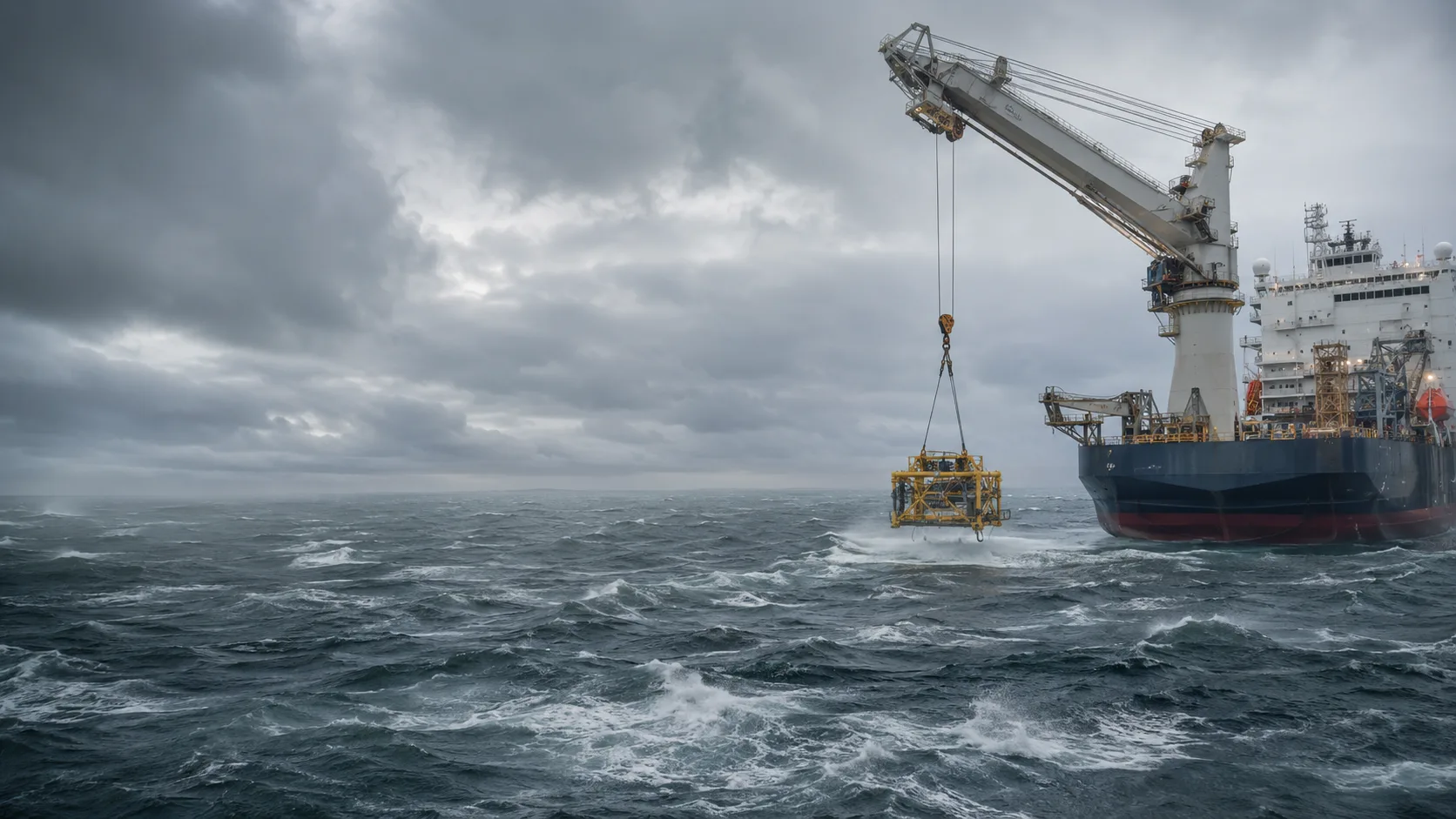
Subsea Lifting
Controlling dynamic loads from the splash zone to the seabed — so subsea lifts stay inside the operating window and land safely the first time.
Splash-Zone Crossing
Control the slam peak and the heave through the splash zone, so the crossing happens inside a wider, safer weather window.
Pile-Run Protection
Cap the shock when a driven pile breaks free and runs — protect the crane, the wire and the hammer, and keep the campaign on schedule.
Resonance Avoidance
Keep the suspended-load system detuned from the wave period — so motion is damped, not amplified, and the lift stays inside its window.
Load-Chart Improvement
Cut the dynamic factor on an offshore lift and recover crane capacity the load chart would otherwise derate away.
Weather-Window Extension
Raising the sea state your lift can work in — so fewer days are lost waiting on weather, and each window does more.
Quick Lift
Snatch the payload off a heaving barge before the next wave can slam it back — the ANTARES quick-lift clears the deck fast, where a conventional crane is left waiting on the sea.
Tension Control
Hold steady tension on the riser through vessel heave — to protect the string and keep working as the sea state builds.
Transfer Lift
Managing the relative motion between two independently moving bodies — so a load transfers cleanly between vessel and platform without snap or re-contact.
Subsea Retrieval
Break out, lift off the seabed and recover through the water column with the snap load held in check — and a wider weather window to work in.
Reducing Dynamic Loads (DAF)
Cut the dynamic amplification factor on your lift, so the same crane and rigging work safely across a wider weather window.