
Coiled-Tubing Heave Compensation:
Holding the Tension Window
Riserless coiled tubing can govern the operation. In this worked example a 2⅜-inch string 400 m long has a 522 kN axial-yield force and can buckle if effective tension is lost — so it has to stay inside a defined tension window while the vessel moves.
Why a riserless coiled-tubing string has to stay inside a defined tension window, what the worked uncompensated case predicts, how the working point shifts when the pipe sticks, and how a project envelope is established.
By Tord Martinsen, CEO · · Reviewed · 5 min read
The string is the governing fragility
400 m of 2⅜″ × 0.190″ CT-90-class tubing has an axial stiffness of EA ≈ 174 MN. Over that length that is 435 kN of tension per metre of stretch — so ±1.5 m of uncompensated relative motion asks the string for ±650 kN, past its 522 kN yield in a single wave.
What happens with no compensation
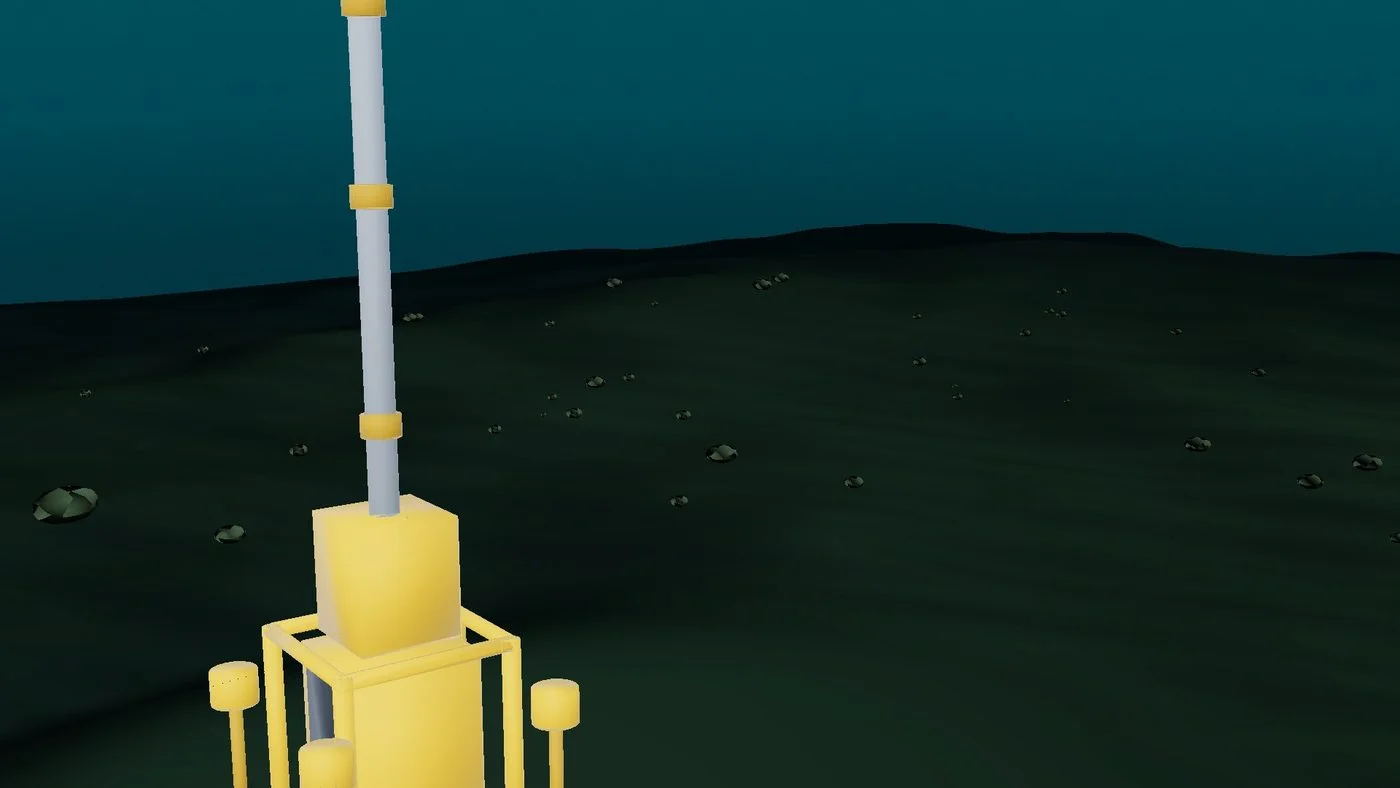
Hang the injector platform rigid in Hs 3.0 m / Tp 9.0 s and the string takes the full motion of the ship. The sea asks it for 1,308 kN against a 522 kN yield, and it parts about fifteen seconds into the job. Across twelve wave realisations of that sea state the rigid hang-off parts the string in every one, between 8.7 s and 32.5 s.
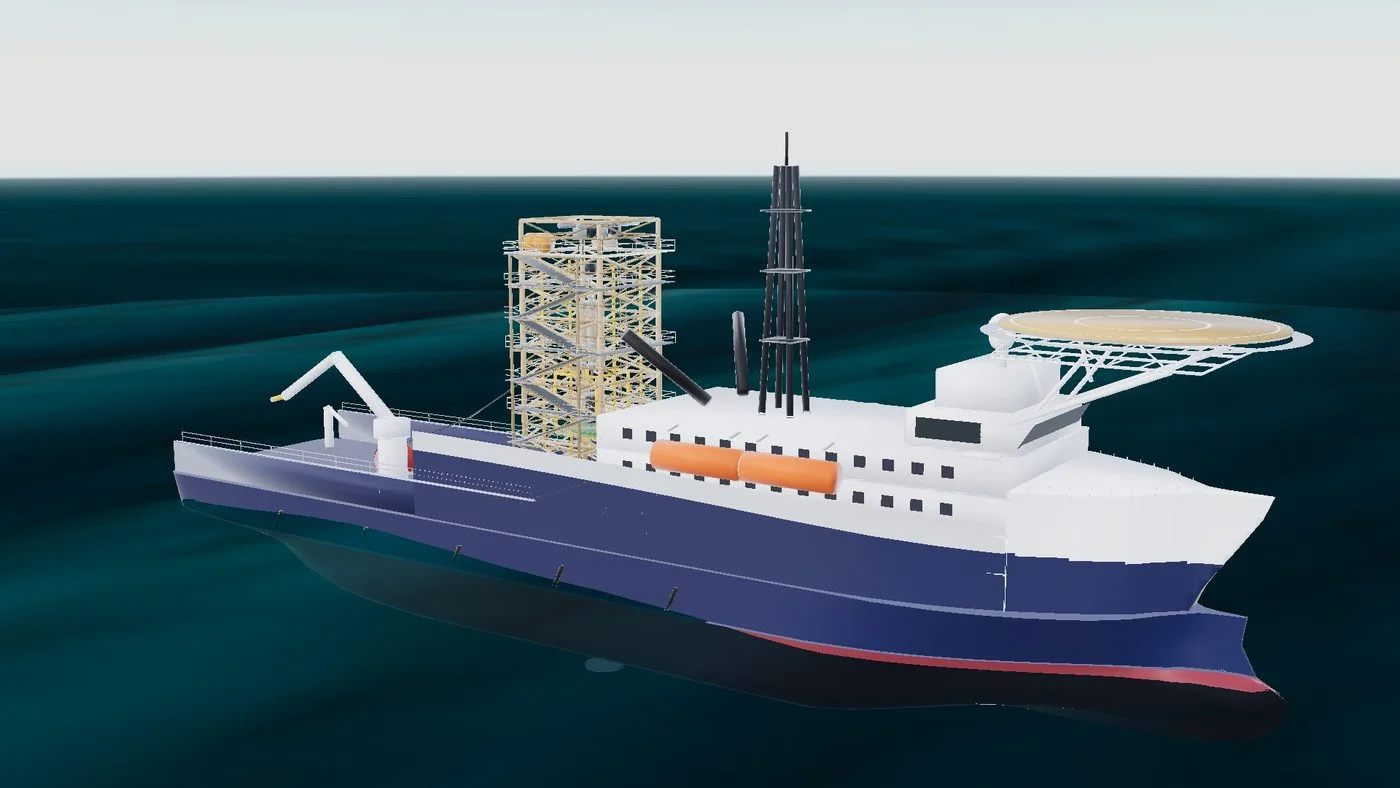
The worked example as a film — the tension window, the stuck-pipe overpull and the parted-string arrest, rendered frame-for-frame from the CONSTELLATION simulation.
What the compensator has to do
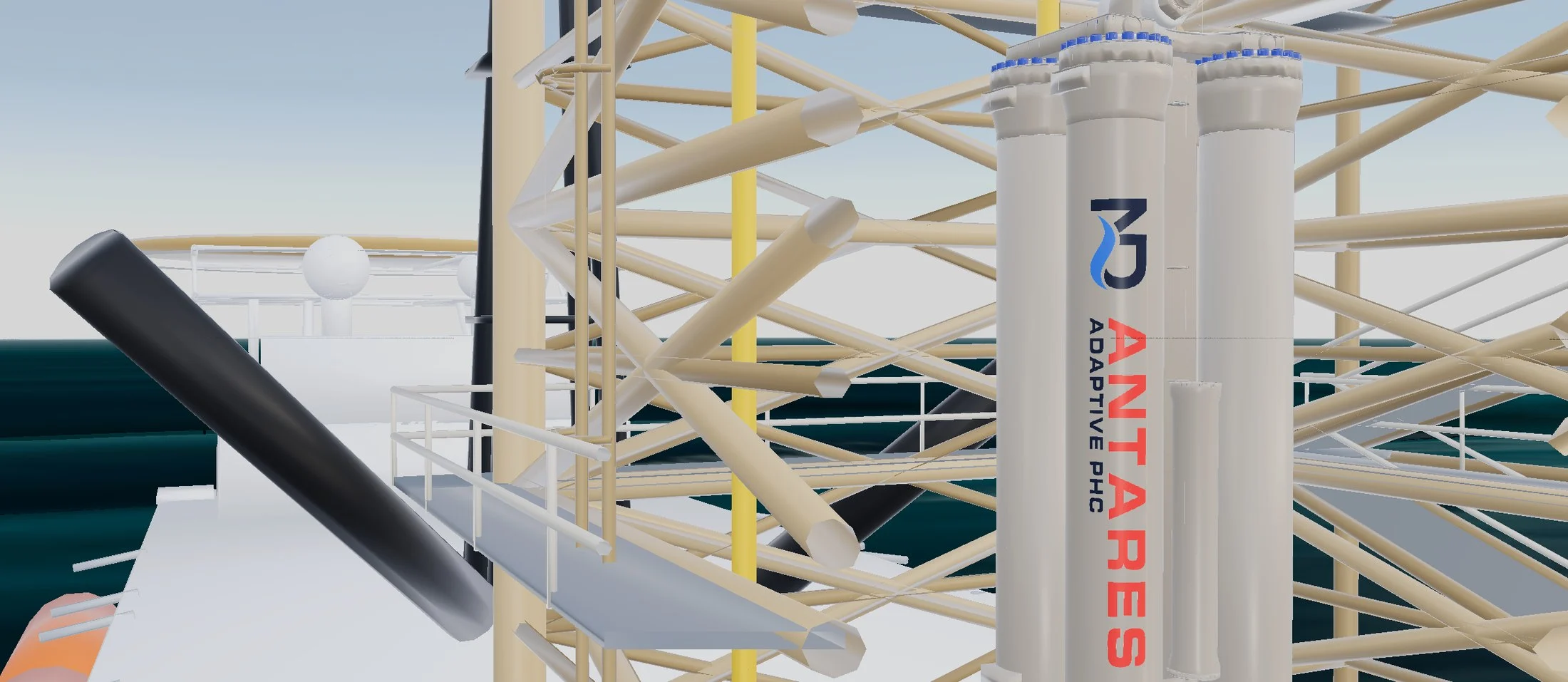
Through one ANTARES 125 t / 5.5 m on its softest charge, the same waves move the tension 93–146 kN about a 118 kN setpoint (roughly ±29 kN) with zero slack events, while the unit absorbs 4.5 m of relative motion.
The mechanism is stiffness, not force: a gas spring soft enough that a metre of ship motion barely changes the pressure, in series with a string that is 435 kN/m stiff. The soft element takes the motion; the string keeps its tension.
Stuck pipe: the same unit, a different working point
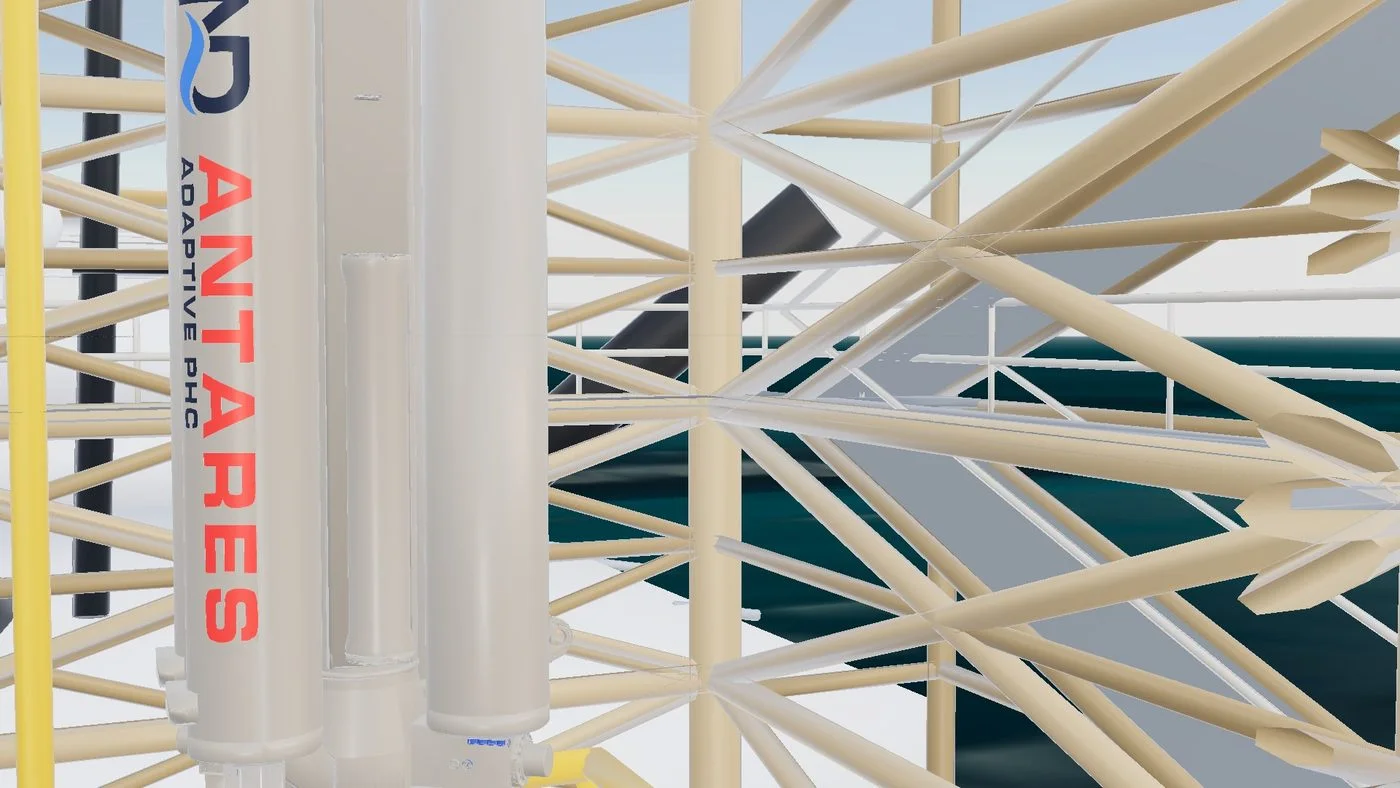
When the tubing sticks, the recovery pull has to rise without the window opening. In this worked example an adaptive passive unit retunes its gas working point in place: the string then carries a 418 kN recovery force (the stated 80 % working line), with wave peaks reaching 89 % of the modelled yield force and no slack event in the twelve realisations. The required setup is case-specific.
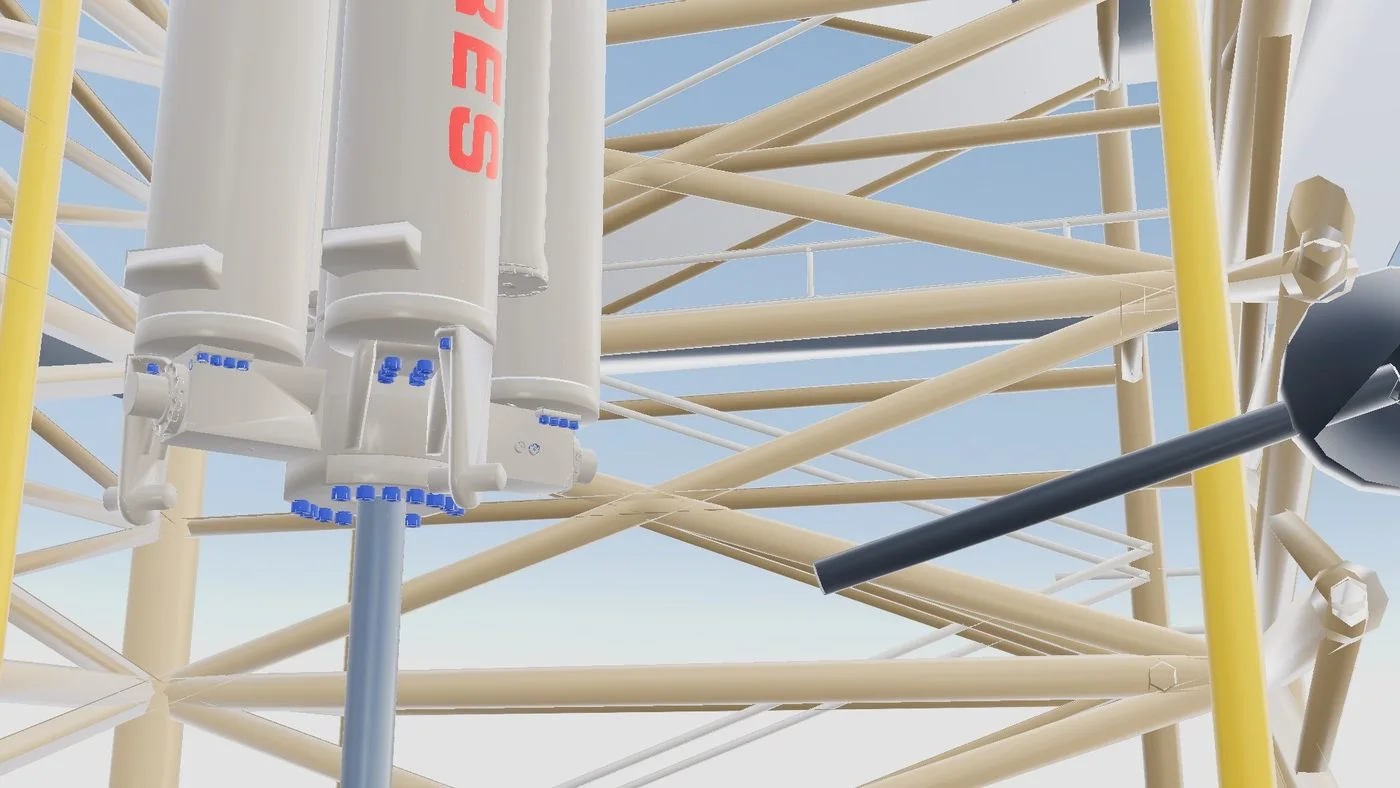
The parted string, and why the end of the stroke matters
The accident the industry actually fears is the string parting at maximum overpull. About 418 kN of tension vanishes in a heartbeat and the platform is thrown upward — 3.2 m in about a second on the realisation shown.
| Parted-string arrest | Shown | Worst of 12 | Limit |
|---|---|---|---|
| Hard-stop contact | none | none | none |
| Hard-stop impact speed | not reached | not reached | ≤ 0.5 m/s if reached |
| Peak deceleration | 2.1 g | 3.7 g | 5.0 g |
| Main-fall peak | 0.61 × SWL | 0.90 × SWL | 1.00 × |
The compensator must damp the end of its own retraction. With that function the platform is arrested without reaching anything hard. Without it, the same platform on the same wave reaches the end of its travel at speed — a critical failure rather than a controlled stop.
In this worked example, the parting transient governs the main-fall demand rather than the routine suspended-load case. The main fall goes momentarily slack as the platform is thrown up, then catches the load again. Another spread must check every phase and boundary condition against its own load definition and criteria.
Where the envelope closes
The published ensemble establishes the stated response only at Hs 3.0 m, Tp 9.0 s for this vessel, heading, load path and twelve-realisation basis. It does not establish a universal Hs-to-stroke rule or a 3.1–3.4 m operating limit. A project envelope must sweep Hs, Tp, heading and the specified spectrum while checking stroke, tension and the parting transient at every cell.
Frequently asked
Why does coiled tubing need heave compensation?
What is the tension window?
Can a passive compensator hold the window in Hs 3 m?
What sizes the main fall on a CT spread?
Send us your case
String size and grade, water depth, vessel and sea state. We return a worked example like this one — the window through the hold, the overpull case, the parted-string arrest, and the ensemble behind every number.
Talk to an engineer
